
Wairoa River
Wairoa River
Clevedon Wharf Reserve, 48 Clevedon-Kawakawa Road
Trail marker #8
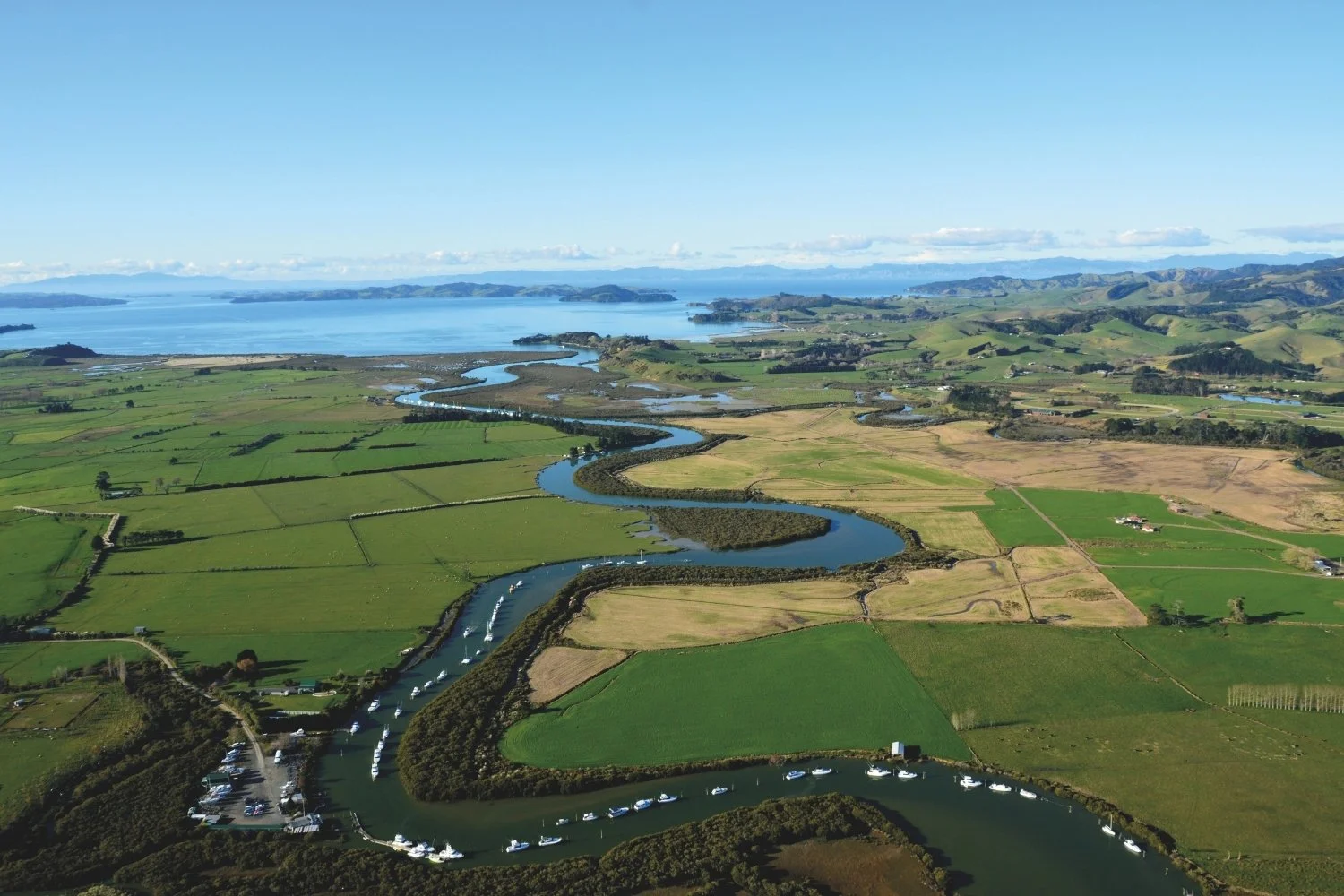
But for the Wairoa River, Clevedon would not exist as it is today.
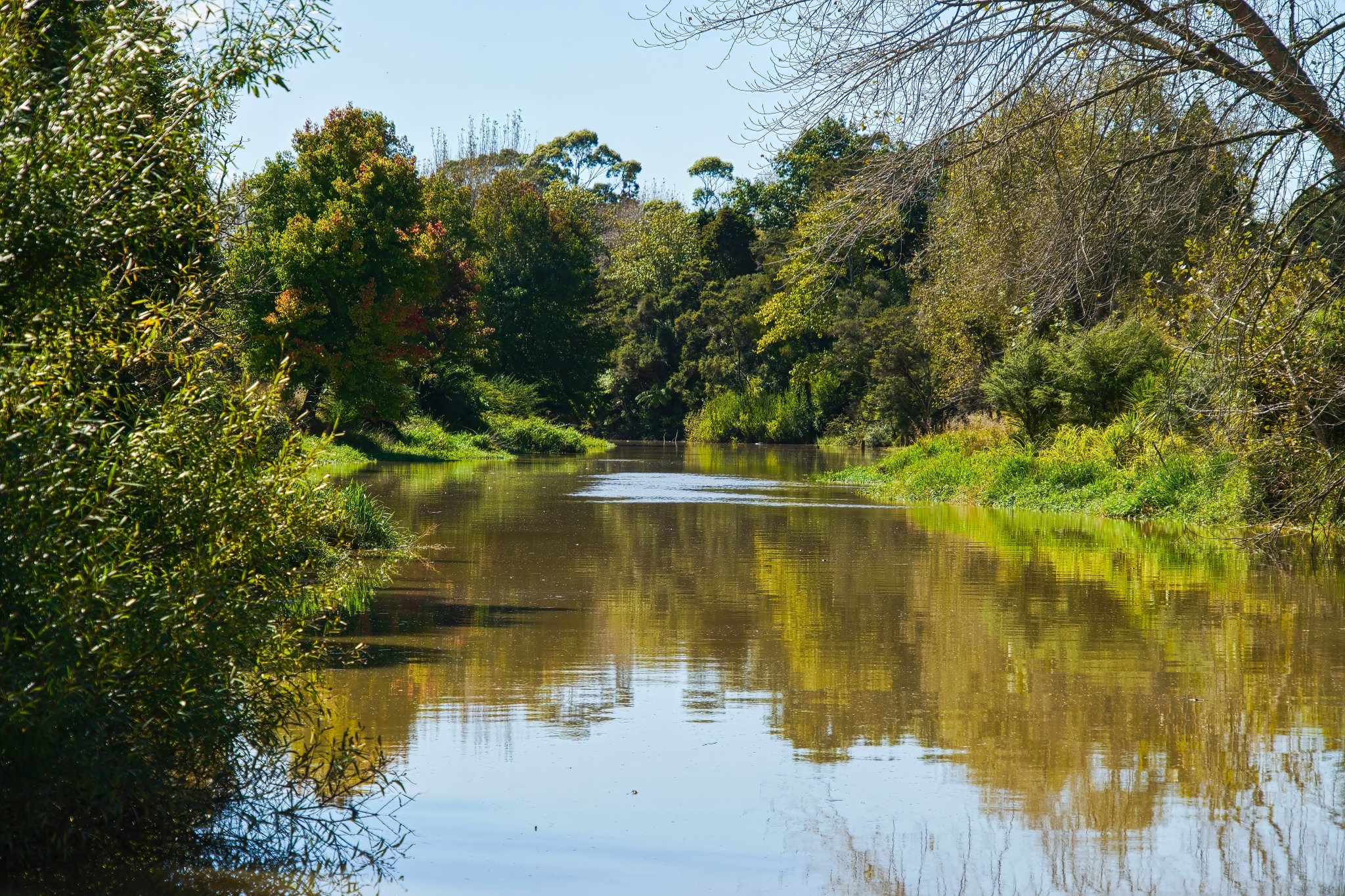
Prior to 1929 the most practical access to the district was by way of the river. The tidal (and navigable) extent stops at the bridge and the journey down river to the Tikapa Moana takes about one hour.
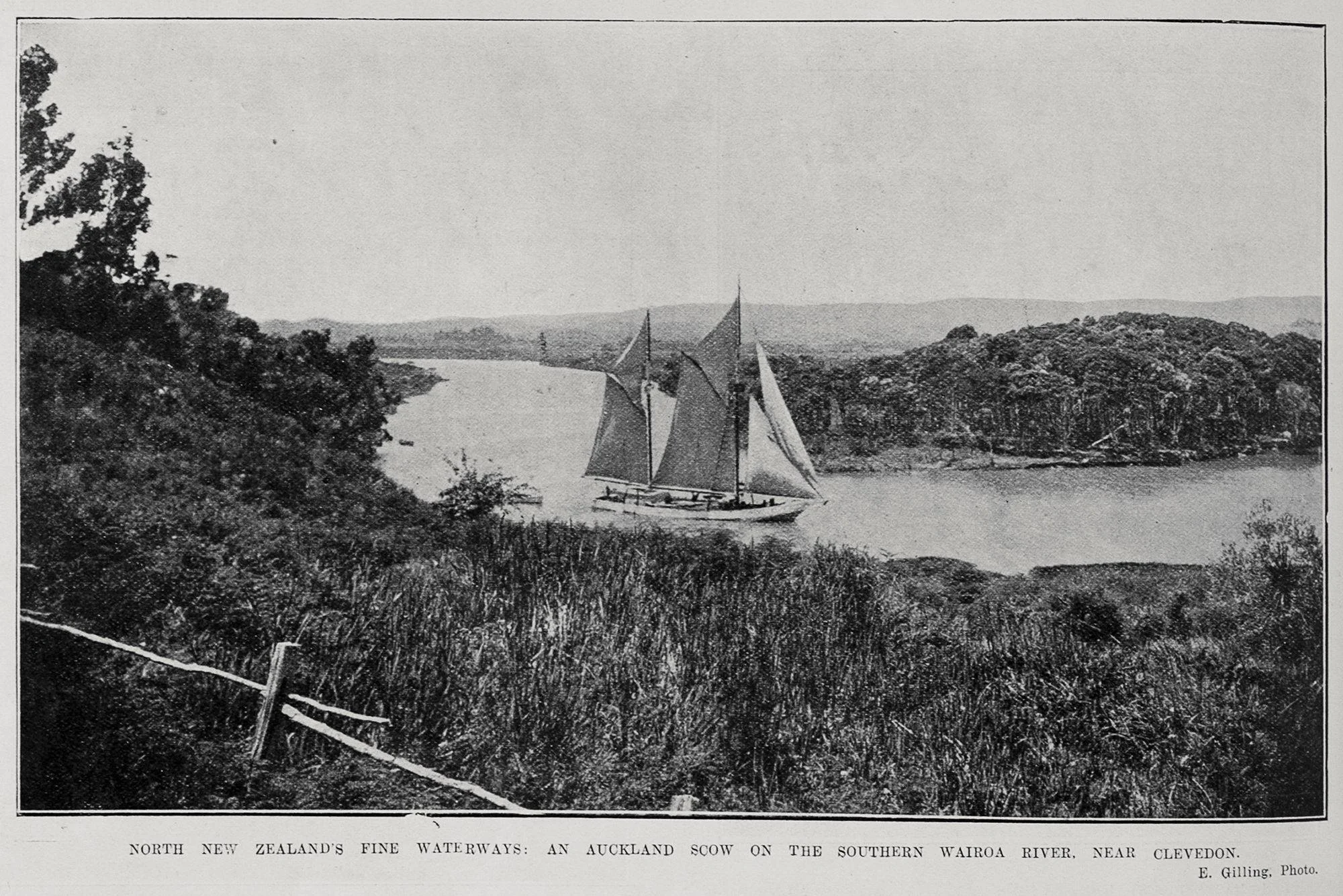
All manner of boats used to navigate up and down the river carrying farming equipment, produce (predominantly butter, manufactured in Clevedon) and people who needed to visit coastal communities or do their shopping in Auckland. As a rule of thumb it was a twelve hour day to Auckland and return; four hours travelling in each direction plus four hours shopping in Queen Street.
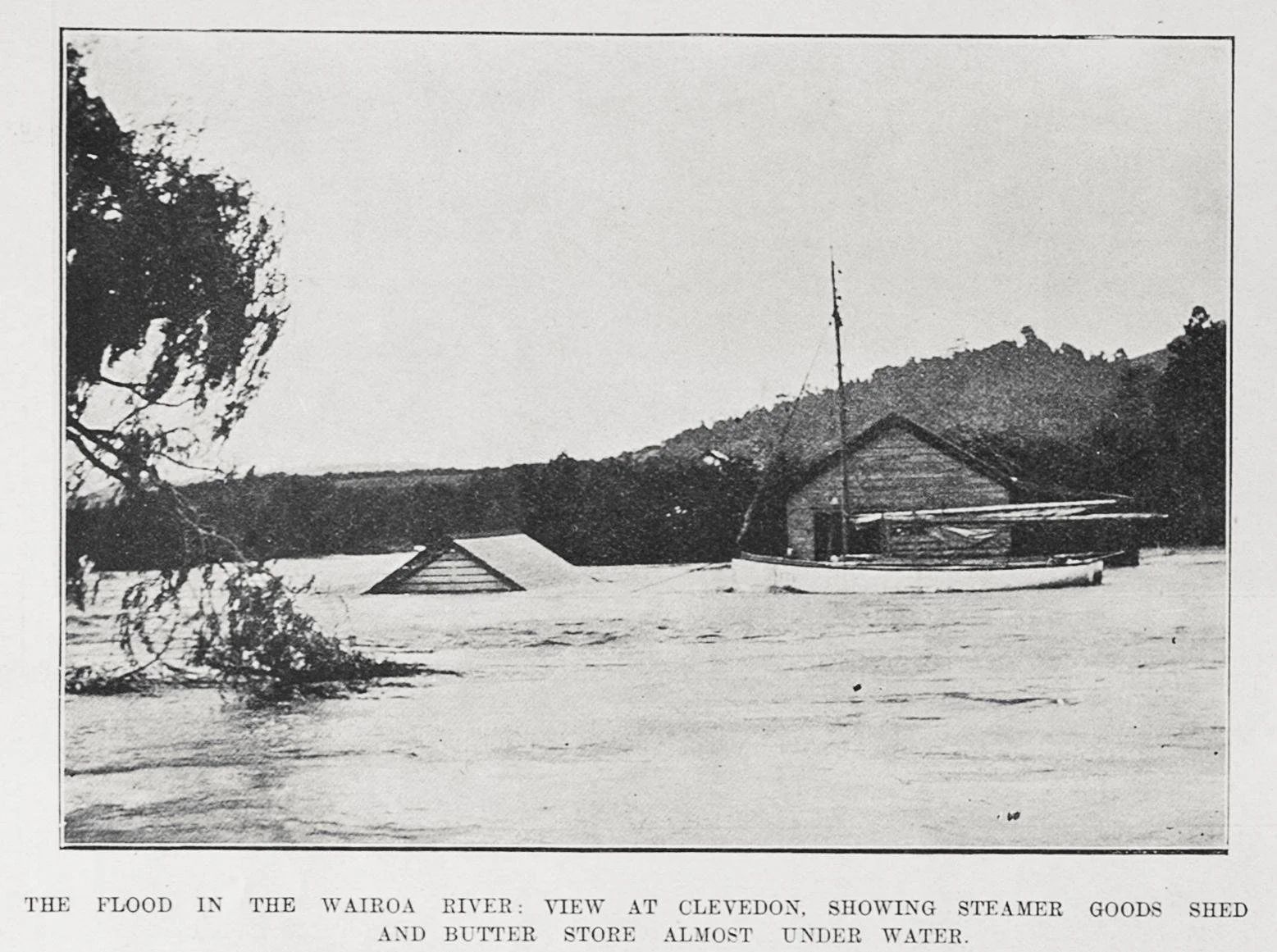
The nature of the river has changed over time with the construction of the Hūnua water reservoirs (1950s-1970s) which has lowered water flow downstream.
-
“The wairua of Te Wairoa is very significant in terms of connectedness to our maunga, our whenua and to our people. Our tūpuna used the river as a source of kai, cleansing, and a source of enriching not only themselves and tribes, but the whenua that’s around it.”
Rev. Barry Bublitz, mana whenua
The Wairoa River's traditional name, Te Wairoa ("The Great River") was named by early Ngāi Tai ki Tāmaki ancestors of the Tainui waka, referencing Te Vairoa in Rarotonga, which in turn took its name from a similarly named river in Tahiti.
The river mouth formed the traditional heartland of Ngāi Tai ki Tāmaki. Ngāi Tai peoples traditionally lived in seasonal cycles, focusing on fishing and shellfish collecting, cultivations and collecting berries and snaring birds in the river's upper reaches, depending on the season. The river-mouth was used as a summer pioke (Shortspine spurdog shark) fishing ground, which were dried for the winter months. Ngāi Tai settled at many pā and kāinga along the river, especially at the river's mouth.
https://en.wikipedia.org/wiki/Wairoa_River_(Auckland)
Local iwi would also use the river banks as urupa (burial sites).
The Wairoa River and its surrounds are among the areas for which Ngāi Tai ki Tāmaki has received a Statutory Acknowledgement as part of the Ngāi Tai ki Tāmaki Claims Settlement Act 2018. A Statutory Acknowledgement is an official recognition by the Crown of an iwi's particular cultural, spiritual, historical, and traditional association with identified areas. This acknowledgement requires consent authorities and the Environment Court to have regard for the iwi's special relationship with these areas when deciding on resource consent applications in the Wairoa Valley. This process aims to incorporate Ngāi Tai ki Tāmaki's cultural values into resource management decisions affecting the Wairoa River.
-
Friends of Te Wairoa, a community volunteer group, is working alongside mana whenua, as kaitiaki of the river, to restore the mauri (life force) of the Wairoa River.
-
On an outgoing tide you can still paddle from the old wharf to the mouth of the river and beyond. We recommend that with a light westerly wind and calm seas you continue your journey around the coast to Waitawa Regional Park. Recommended for experienced paddlers.
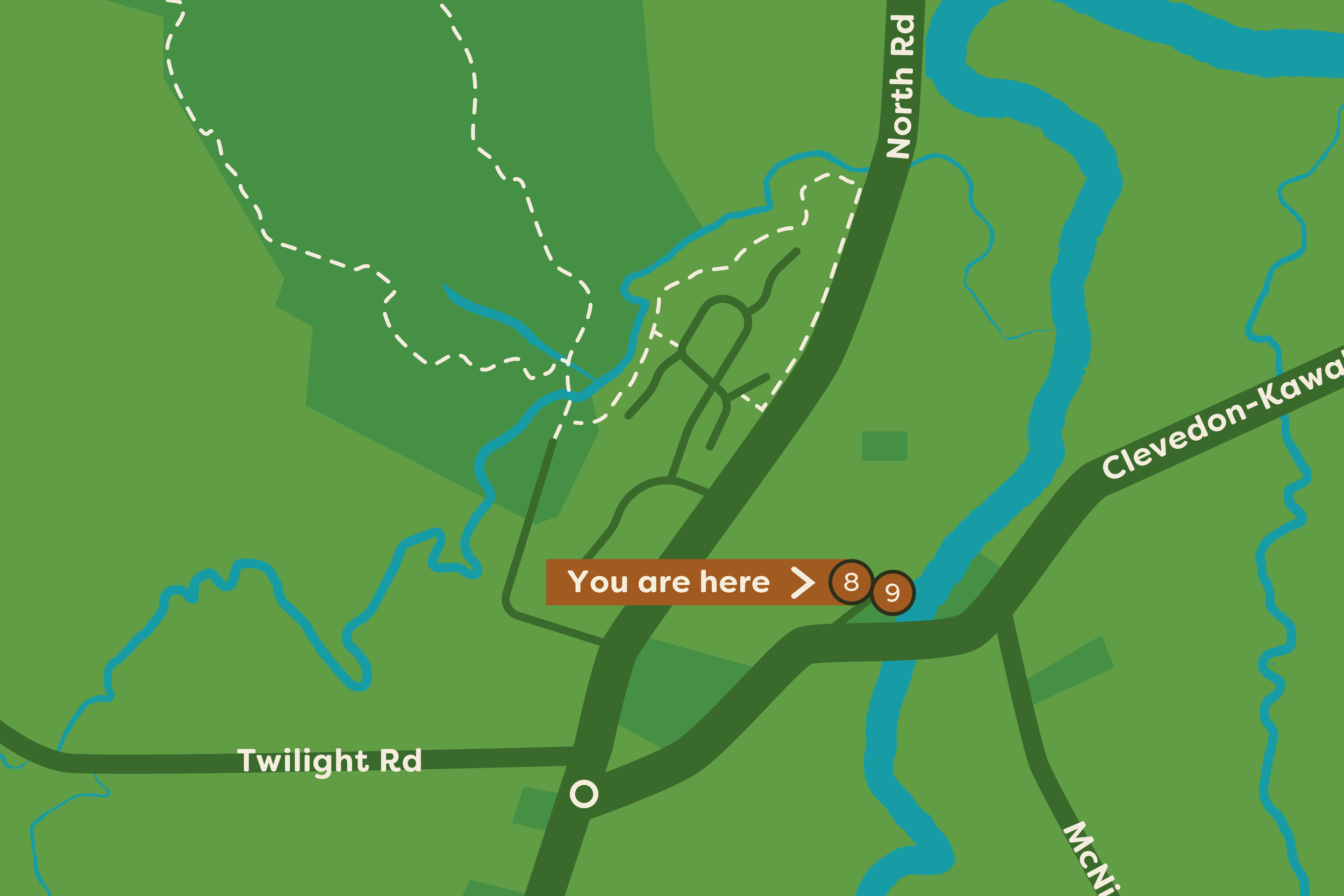
Location Map
You are currently at Heritage Trail Location #8, Wairoa River
Remain at the same location to experience the next site:
Clevedon Wharf & River Boats
The information for each site has been thoughtfully prepared in collaboration with the Clevedon Districts Historical Society, drawing on Voices of Belonging by Jessie Munro, Yesteryears by F. Murray, and records from the McNicol Homestead Museum. Together, they tell the story of Clevedon and the people and places that made it the community we know today.
A special acknowledgement to photographer Donna Jepsen for her work capturing these sites as they appear today.
-
“Voices of Belonging”, Jessie Munro, 2016. Available to view and purchase at McNicol Homestead and for loan from the Clevedon Rural Library.
“Yesteryears”, Fraser Murray, 2009. Available to view and purchase at McNicol Homestead.
The Archeology of Clevedon Village and Wairoa River Valley, Opus.
The History of Clevedon School
An broad overview of our local history is available at clevedon.co.nz
Ngai Tai ki Tamaki’s history is rich and detailed in a number of online records;
• Ngāi Tai ki Tāmaki website (“Our Stories”)
• Ngāi Tai ki Tāmaki’s Deed of Settlement (Section 2.0 Historical Account)
• Clevedon School 150 year anniversary summary