
Thorp’s Quarry
Thorp’s Quarry
30 Thorps Quarry Road
Trail marker #4
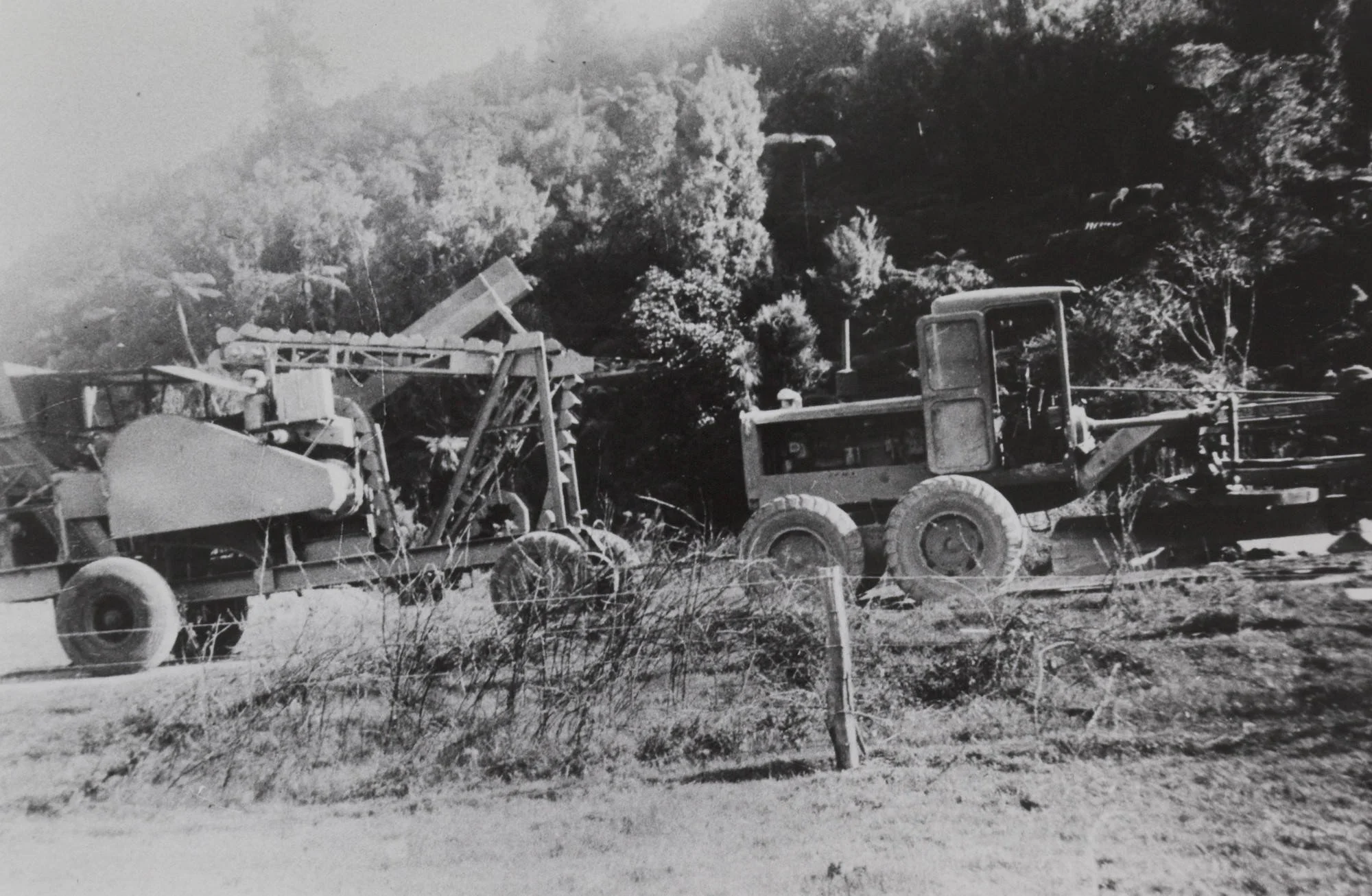
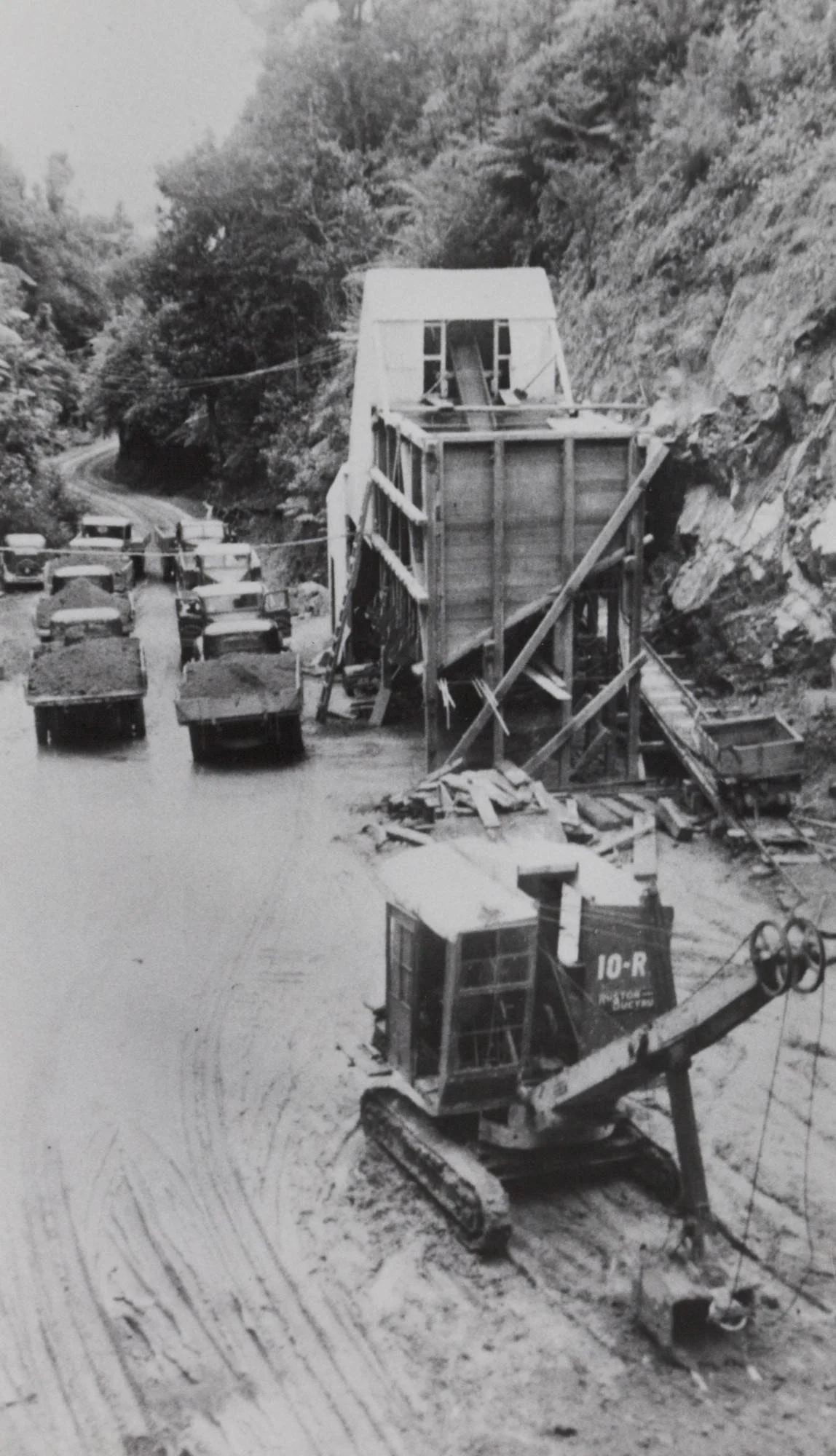
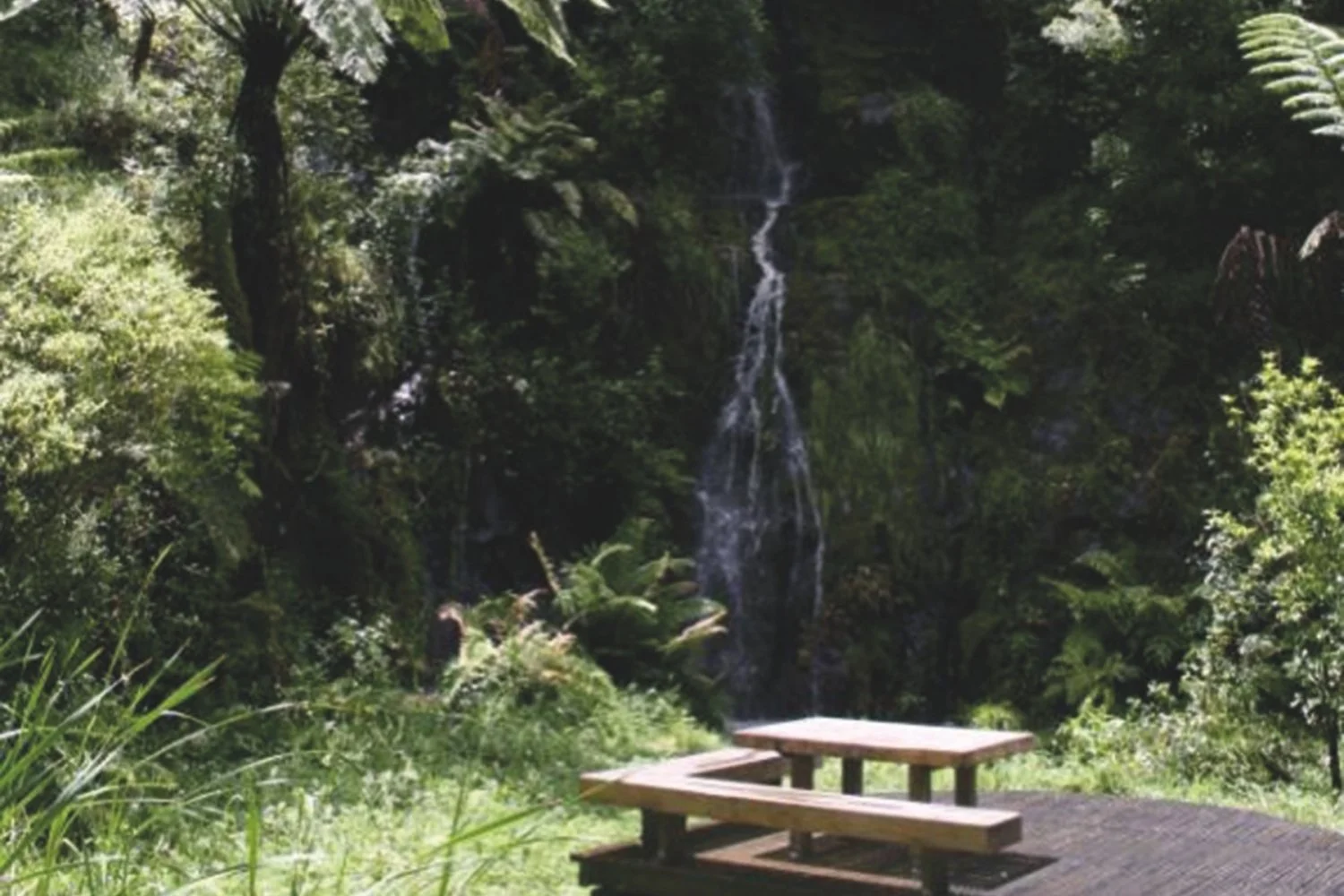
You’re now standing in the remnants of an old quarry site, carved out between two ridgelines. Greywacke is the principal underlying rock in this area and was used in the construction of local roads and footpaths.
Roads were initially non-existent and their development in the horse-drawn era was a long gradual process. It was common for the earliest settlers to walk to Auckland via Howick, carrying produce to sell and bringing supplies back.
-
With the ever expanding industry of the area, roads coming in and out of the village and servicing the Clevedon wharf were essential to the success of the early settlers. But without access to the machinery of today building and maintaining these roads was back-breaking work and – as has become a Clevedon tradition – complaints about the condition of the road were rife.
Theophilus Stevens wrote this poetic description of the ‘muddy track’ that was East Road (now Monument Road) in 1876:
“Ruts like ditches, deep and broad
And mud holes gaping, open-jawed
Lay hid by winter night’s dark cloak
To swallow up unwary folk”
(VB, p.232).
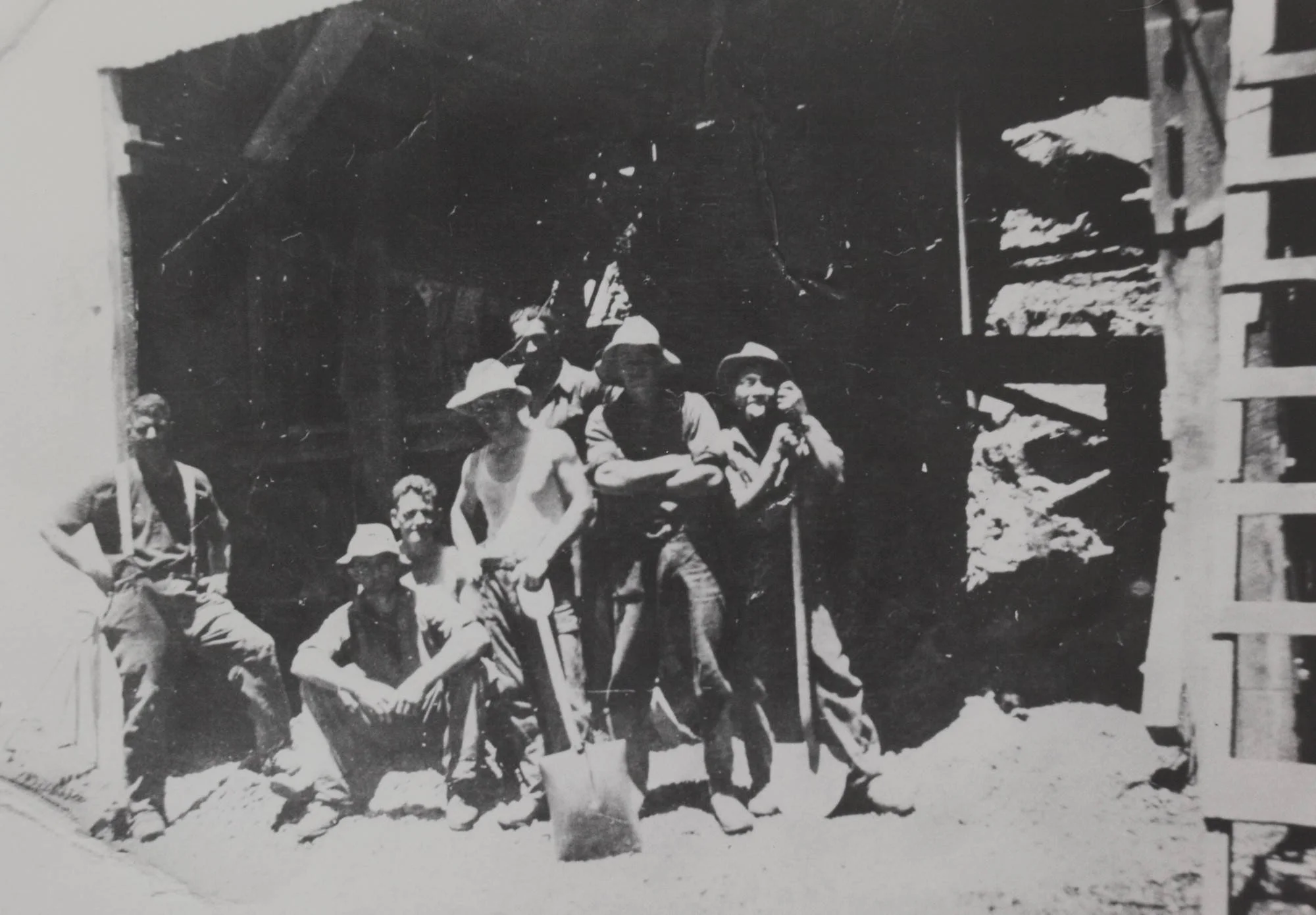
Throughout the years, all around the district, land was surveyed, cleared and drained, picks and shovels established the gradient, and metal was laid by hand. Under the oversight of the Wairoa Road Board, the network of roads was slowly extended across the district. By 1883 a road back to Papakura was metalled enabling an ease of travel where 25 years prior settlers had “traveled with difficulty and danger on a bullock sledge.” (VB, p. 203).
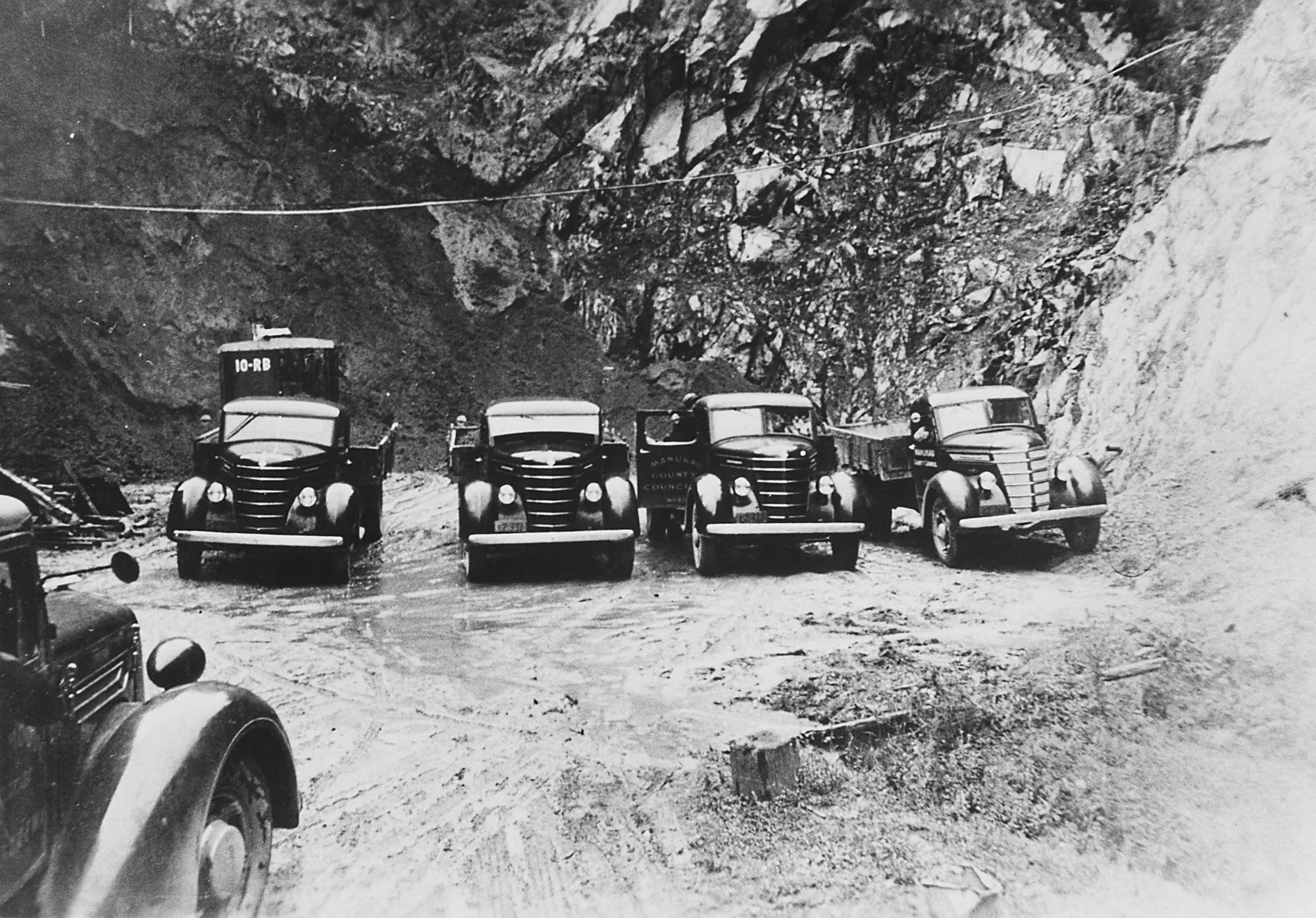
Metal was sourced as shingle from river beds or from local quarries. Here at Thorp’s Quarry Stan Street remembers having to “climb up on the quarry face with a pick, and pick the metal down and it would fall onto a metal plate on the bottom and when you thought you had enough you’d get down and shovel it into your truck.” (VB, p. 453)
-
In 1914 the Wairoa Road Board bought this land as a quarry reserve in an effort to secure the supply of gravel and also to preserve the surrounding land for public enjoyment and conservation. The area was gazetted in 1930 for scenic purposes and eventually became Clevedon Scenic Reserve under the control of Manukau County in 1957. Today the quarry area has been restored into a freshwater wetland.
-
As you return back to the bridge note the remnant kahikatea trees in the grassed area. This handful of kahikatea that you pass through were once part of a much larger population. Kahikatea timber was initially used as timber for buildings but was soon found to be unsuitable. Later it was used to make butter boxes as the timber did not taint the butter. With the Wairoa South Butter and Cheese Factory operating on Monument Road from 1884, local demand for kahikatea timber was likely been high.
Location Map
You are currently at Heritage Trail Location #4, Thorp’s Quarry
Ready to see the next site? Follow the path highlighted on the adjacent map or follow the directions below to reach your next location:
Norfolk Pine Trees, Thorps’ House "Beckby" (approx 500m)
-
Next site:
Norfolk Pine Trees, Thorps’ House "Beckby" (approx 500m)Return to the bridge. Upon exiting the hygiene station turn hard left and continue along the Taitaia Stream path to the next site marker, located adjacent to the path.

The information for each site has been thoughtfully prepared in collaboration with the Clevedon Districts Historical Society, drawing on Voices of Belonging by Jessie Munro, Yesteryears by F. Murray, and records from the McNicol Homestead Museum. Together, they tell the story of Clevedon and the people and places that made it the community we know today.
A special acknowledgement to photographer Donna Jepsen for her work capturing these sites as they appear today.
-
“Voices of Belonging”, Jessie Munro. 2016. Available to view and purchase at McNicol Homestead and for loan from the Clevedon Rural Library.
“Yesteryears”, Fraser Murray. 2009. Available to view and purchase at McNicol Homestead.
The Archeology of Clevedon Village and Wairoa River Valley, Opus.
The History of Clevedon School
An overview of our local history is available at clevedon.co.nz
Ngai Tai ki Tamaki’s history is rich and detailed in a number of online records;
• “Our Stories” on the Ngāi Tai ki Tāmaki website
• Section 2.0 Historical Account in Ngāi Tai ki Tāmaki’s Deed of Settlement
• This summary was produced for the Clevedon School 150 year anniversary