
McNicol Homestead
McNicol Homestead
12R McNicol Road
Trail marker #12
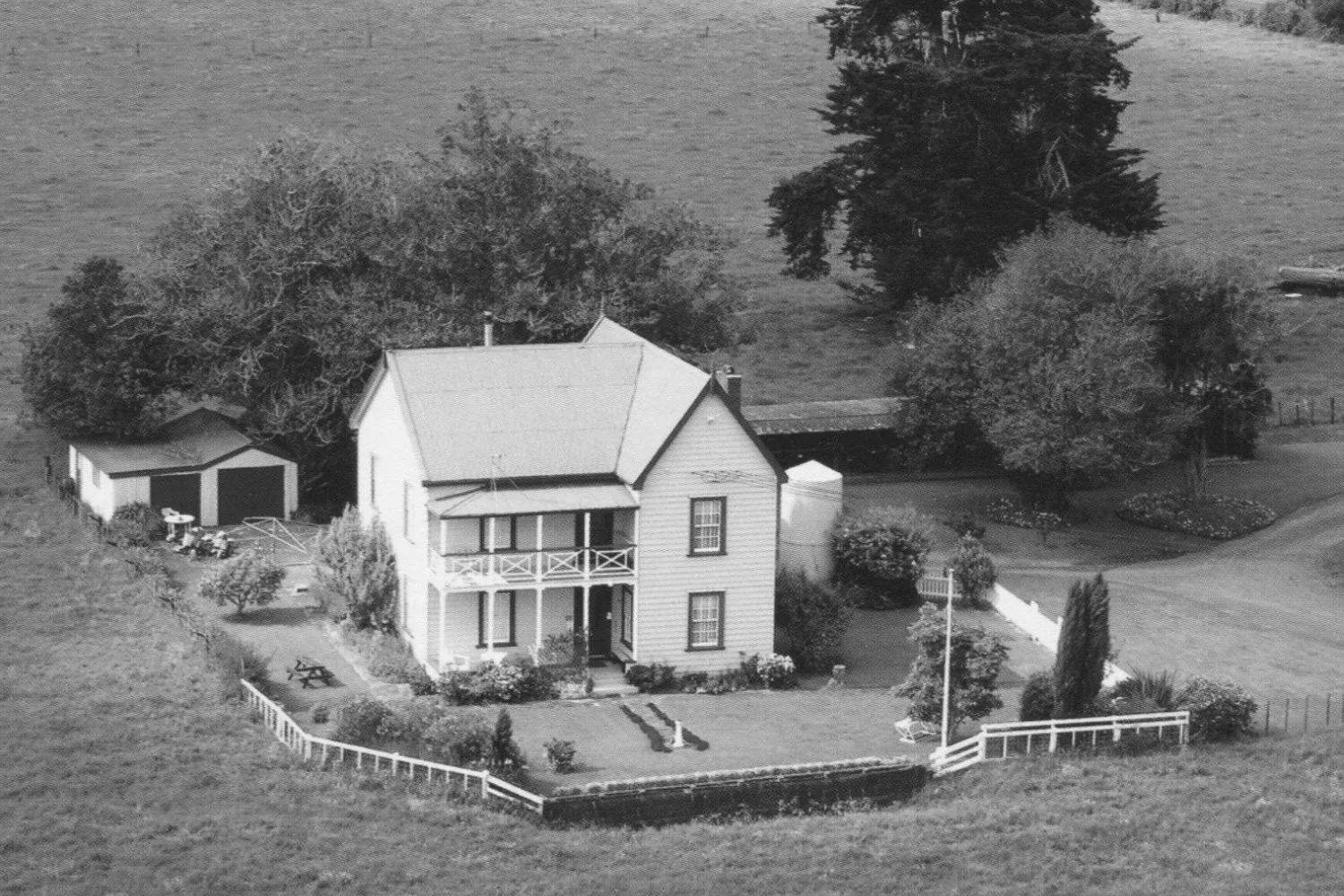
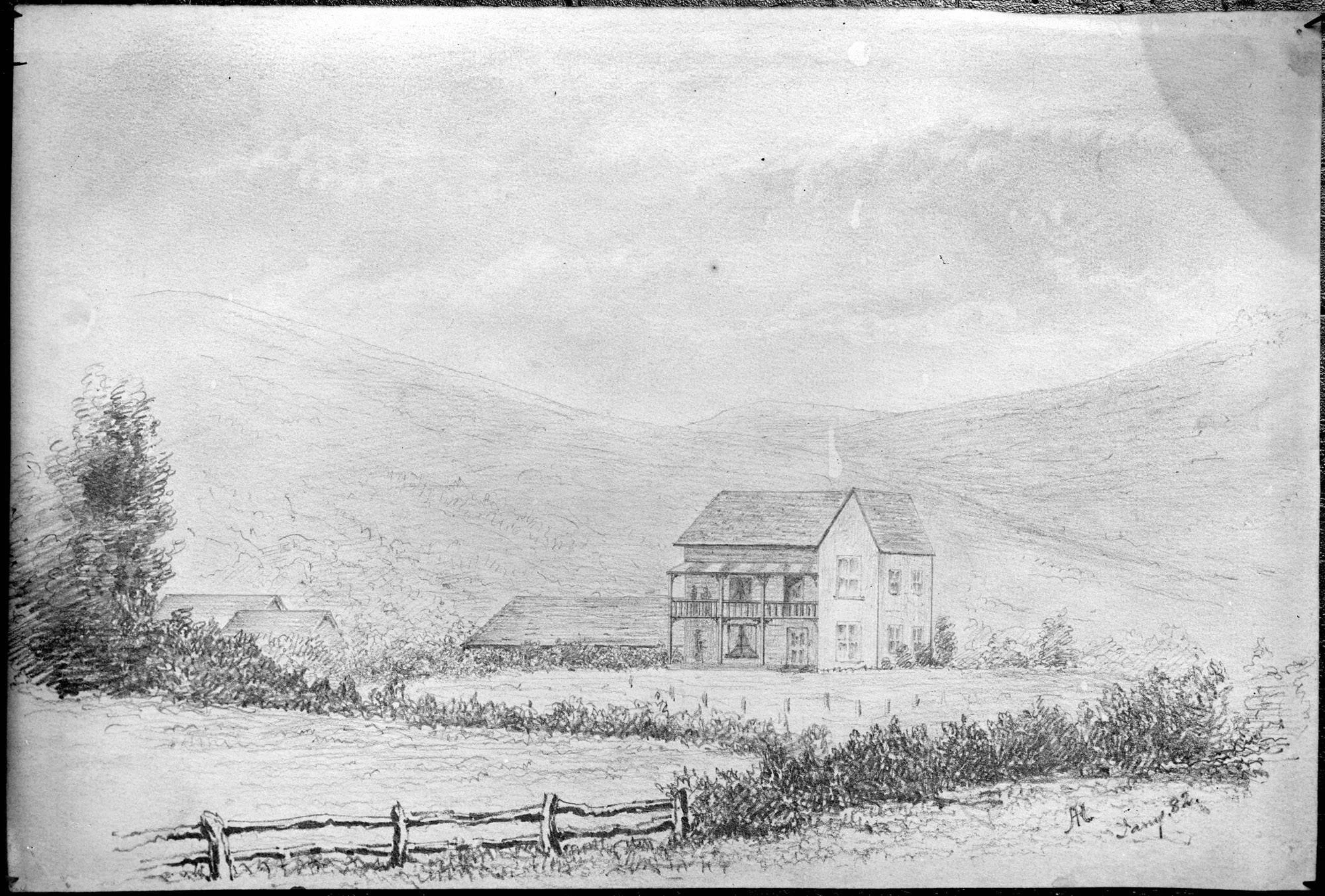
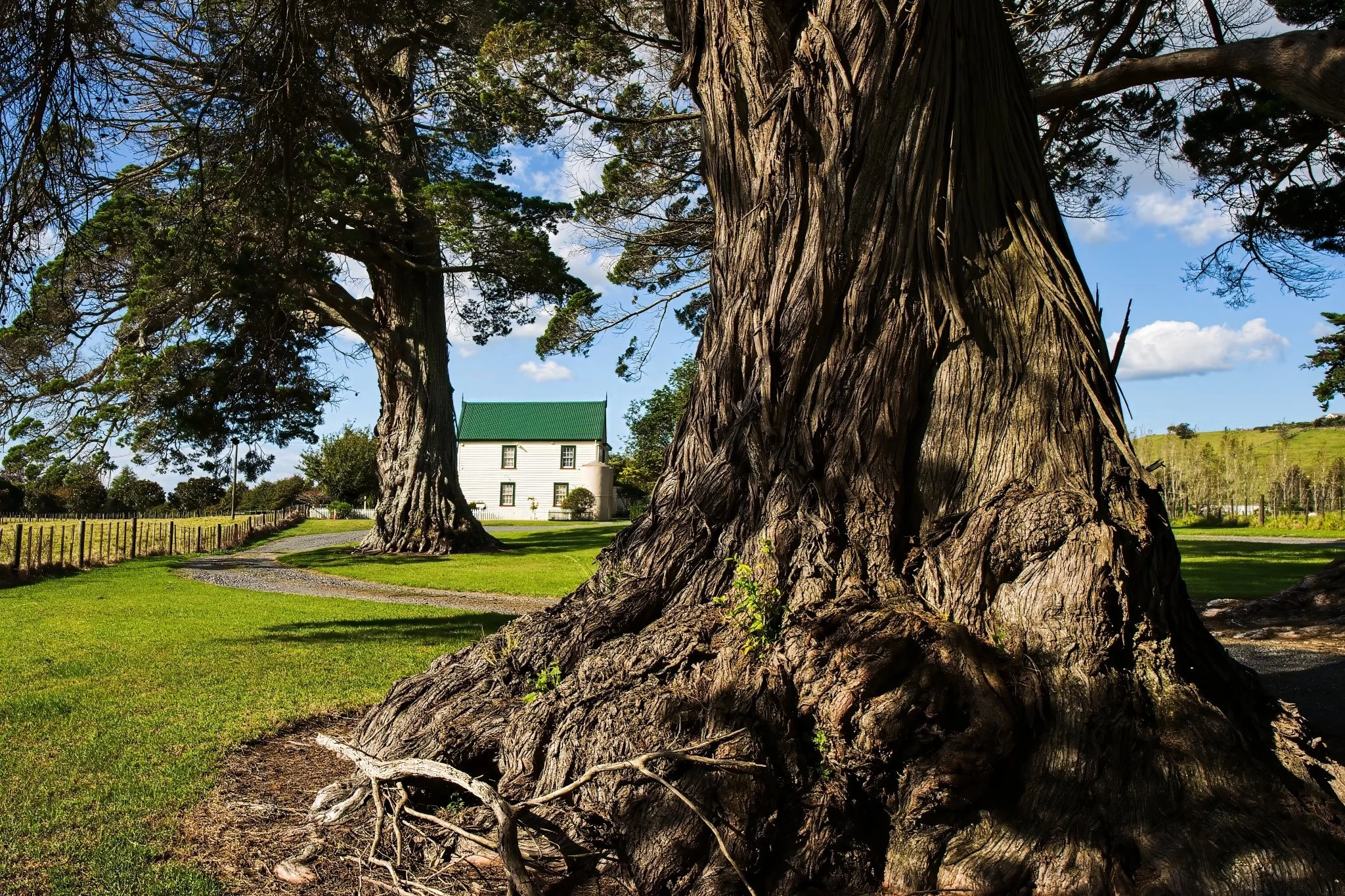
The McNicol family, who were among the first European settlers in the district, built this charming two-storey solid kauri home in 1878, naming it ‘Glen Albyn’.
It was the second house on the property. The first single storey cottage, like other early wooden structures, very likely deteriorated fairly quickly owing to an early lack of knowledge of native woods. This house appears to be all heart kauri and without much doubt would have had a kauri shingled roof.
-
Originally from Arran in Scotland, Duncan and Marion McNicol, together with three daughters, arrived in New Zealand in 1853, accompanied by George Hoye, from Fifeshire, with whom they had spent some years on the Ballarat goldfields in Australia.
These pioneering families travelled from Auckland to Wairoa by Maori canoes, hosted overnight possibly at Umupuia marae on what is now the Maraetai Coast Road.
Their earliest days in Clevedon were spent, with five children (two more were born in the Wairoa) living in a raupō whare, constructed by local iwi. The first entirely Pākehā family group received into the Wairoa, it is chronicled that upon arrival Marion McNicol didn’t see another white woman for nine months.
The McNicol and Hoye holding was strategically midway between two riverside kainga of Te Urungahauhau and Ōtau, whose cultivated gardens were destined for the Auckland markets and the booming Australian goldfields. These early settlers were welcomed by Ngāi Tai who – as well as transport and house building – taught the settlers about the foods of the bush.
Other settlers soon joined them, then more fellow Scots who came out in 1865 on the ship Viola, from which 150 settled in the Clevedon Valley and surrounding areas.
-
“In 1977 a group of Clevedon residents formed the Clevedon (later Clevedon and Districts) Historical Society to preserve the records of the district. Meanwhile Peg McCutcheon (nee McNicol) was successful in having her century-old home designated as a heritage building. When Bernie Ross, the new owner of the McNicol farm, decided to give the homestead to the people of Clevedon, the Historical Society negotiated with Manukau City Council, who assumed the responsibility of ownership with the society as lessees and custodians for the people of Clevedon. In 1980 the McNicol Homestead Museum came into being. Now under Auckland Council it lives on, still managed by the Clevedon & Districts Historical Society, as a repository of the district’s history and as a community asset.”
(VB, p. 438).
Open Saturdays and Sundays, 1-4pm or by appointment.
email: preservingthepast@xtra.co.nz
phone: 09 292 8421
Upstairs you can observe a kitchen of those far-off days, complete with coal range and utensils one would have used long ago.
Elsewhere on the upper floor, you can see a “Settler’s Bedroom”, a “Gallery” room, and finally a “Services” room, the latter containing a great deal of relevant information concerning military matters, the local scout movement and the district’s churches.
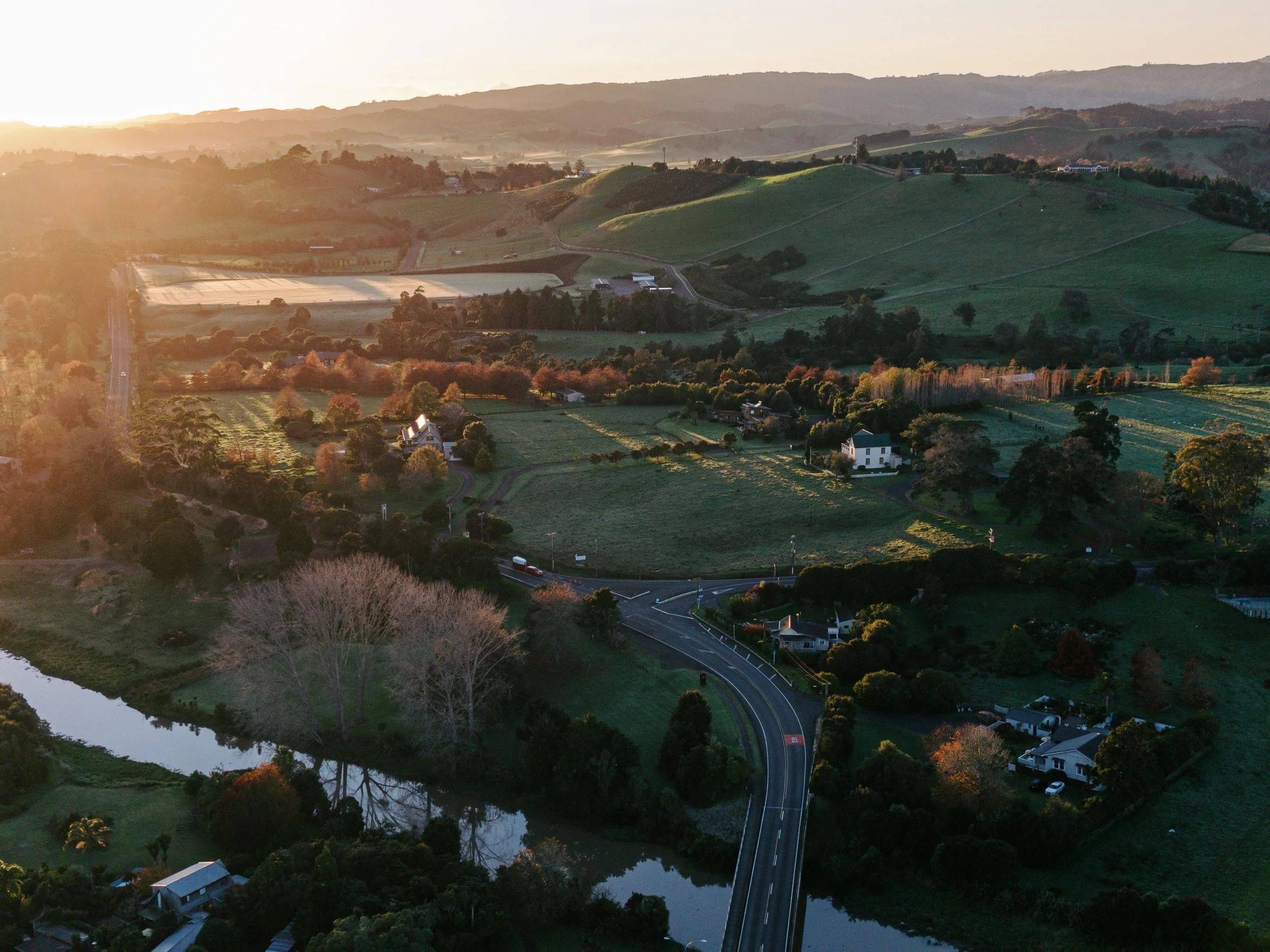
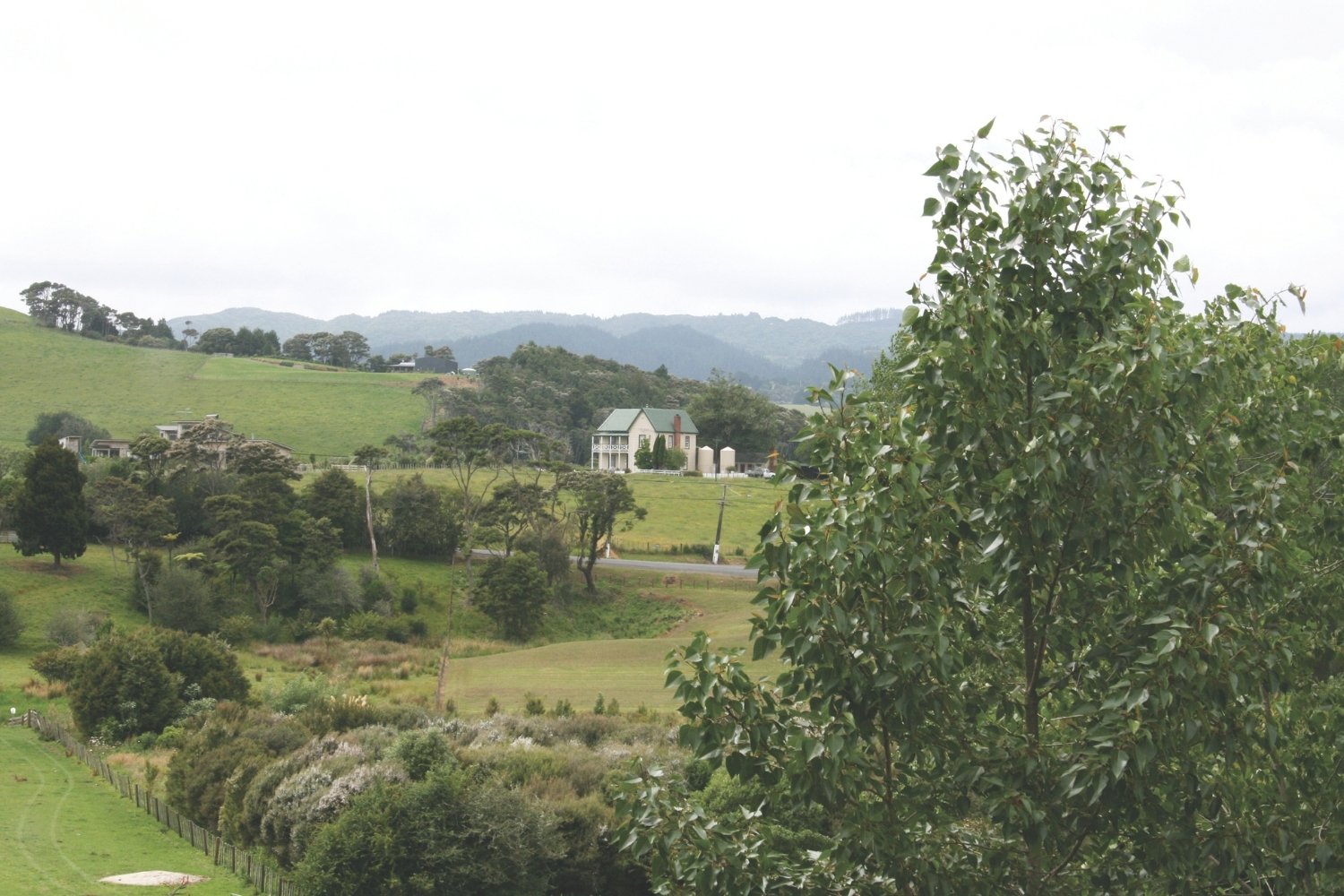
From the upstairs balcony enjoy a magnificent view of rural tranquillity stretching over the Wairoa Valley.

Location Map
You are currently at Heritage Trail Location #12, McNicol Homestead
Ready to see the next site? Follow the path highlighted on the adjacent map or follow the directions below to reach your next location:
Clevedon Post Office (approx 950m)
-
Next site:
Clevedon Post Office (approx 950m)Return to Clevedon-Kawakawa Road and the safety of the footpath on the north side of the road. Walk westwards back into the village centre. At the roundabout, cross to the south side of Clevedon-Kawakawa Road and locate the next site marker on the front of the Clevedon District Centre.

The information for each site has been thoughtfully prepared in collaboration with the Clevedon Districts Historical Society, drawing on Voices of Belonging by Jessie Munro, Yesteryears by F. Murray, and records from the McNicol Homestead Museum. Together, they tell the story of Clevedon and the people and places that made it the community we know today.
A special acknowledgement to photographer Donna Jepsen for her work capturing these sites as they appear today.
-
“Voices of Belonging”, Jessie Munro, 2016. Available to view and purchase at McNicol Homestead and for loan from the Clevedon Rural Library.
“Yesteryears”, Fraser Murray, 2009. Available to view and purchase at McNicol Homestead.
The Archeology of Clevedon Village and Wairoa River Valley, Opus.
The History of Clevedon School
An broad overview of our local history is available at clevedon.co.nz
Ngai Tai ki Tamaki’s history is rich and detailed in a number of online records;
• Ngāi Tai ki Tāmaki website (“Our Stories”)
• Ngāi Tai ki Tāmaki’s Deed of Settlement (Section 2.0 Historical Account)
• Clevedon School 150 year anniversary summary